
What Causes Eczema Flare-Ups, and Natural Ways to Calm the Itch
Learn what causes eczema flare-ups and discover natural, evidence-informed ways to soothe itchy skin and support your skin barrier daily.
Eczema, also called atopic dermatitis, can feel unpredictable. One week your skin is calm, the next it's red, dry, and unbearably itchy. But eczema isn't random. It comes from a few specific things happening in your skin at the same time, and understanding them makes it much easier to see why certain natural approaches actually help, while others are just marketing.
The Three Things Driving Eczema
1. A weaker skin barrier
Think of healthy skin like a brick wall. Skin cells are the bricks, and lipids (fats) are the mortar holding everything together and keeping moisture in. In eczema-prone skin, that mortar is often thinner, partly due to differences in a protein called filaggrin, which normally helps skin cells bind together and stay hydrated. When the barrier is weaker, water escapes more easily and irritants get in more easily too.
2. An immune system that overreacts
Once irritants slip past a weakened barrier, the immune system responds strongly, releasing inflammatory signals that cause redness, swelling, and the intense itch that defines eczema. This is part of why eczema often shows up alongside asthma or hay fever. It's the same overactive immune tendency appearing in different parts of the body.
3. An imbalance of skin bacteria
People with eczema often have more Staphylococcus aureus bacteria on their skin and less microbial diversity overall compared to people without eczema. This imbalance can add to inflammation and trigger flares, creating a cycle where a weaker barrier lets more bacteria in, which increases inflammation, which weakens the barrier further.
Everyday triggers like dry air, harsh soap, sweat, wool clothing, and stress don't cause eczema on their own. They aggravate one or more of these three underlying mechanisms.
Natural Approaches, Matched to Each Cause

1. Moisturize generously and consistently
This is the best-supported natural step for eczema. Applying a thick, fragrance-free moisturizer twice a day helps rebuild the barrier and reduce water loss. Ointments and creams tend to work better than thin lotions because they seal in more moisture. Applying moisturizer right after bathing, while skin is still slightly damp, helps lock hydration in. For a full walkthrough of gentle daily moisturizing routines, see our guide on natural remedies for eczema and calming itchy skin.
2. Try wet wrap therapy during flares
For more intense flares, wrapping moisturized skin in a damp layer of cotton clothing, followed by a dry layer, can intensively rehydrate skin overnight. It's a simple, drug-free technique used in dermatology settings to calm itching and support the barrier when skin needs extra help.
3. Use sunflower seed oil to support the barrier
Sunflower seed oil is rich in linoleic acid, a fatty acid that supports the skin's natural lipid layer. Some research suggests it's better tolerated than olive oil, which can actually weaken barrier function in certain studies. This is a good reminder that natural doesn't automatically mean gentle, so it helps to choose oils based on what they actually do to skin.
4. Consider virgin coconut oil
A small clinical trial found that virgin coconut oil applied to skin improved eczema severity more than mineral oil in children, likely because of its moisture-sealing and mild antibacterial properties. It's a reasonable, low-risk option to try, though the research is still limited.
5. Soothe itching with colloidal oatmeal
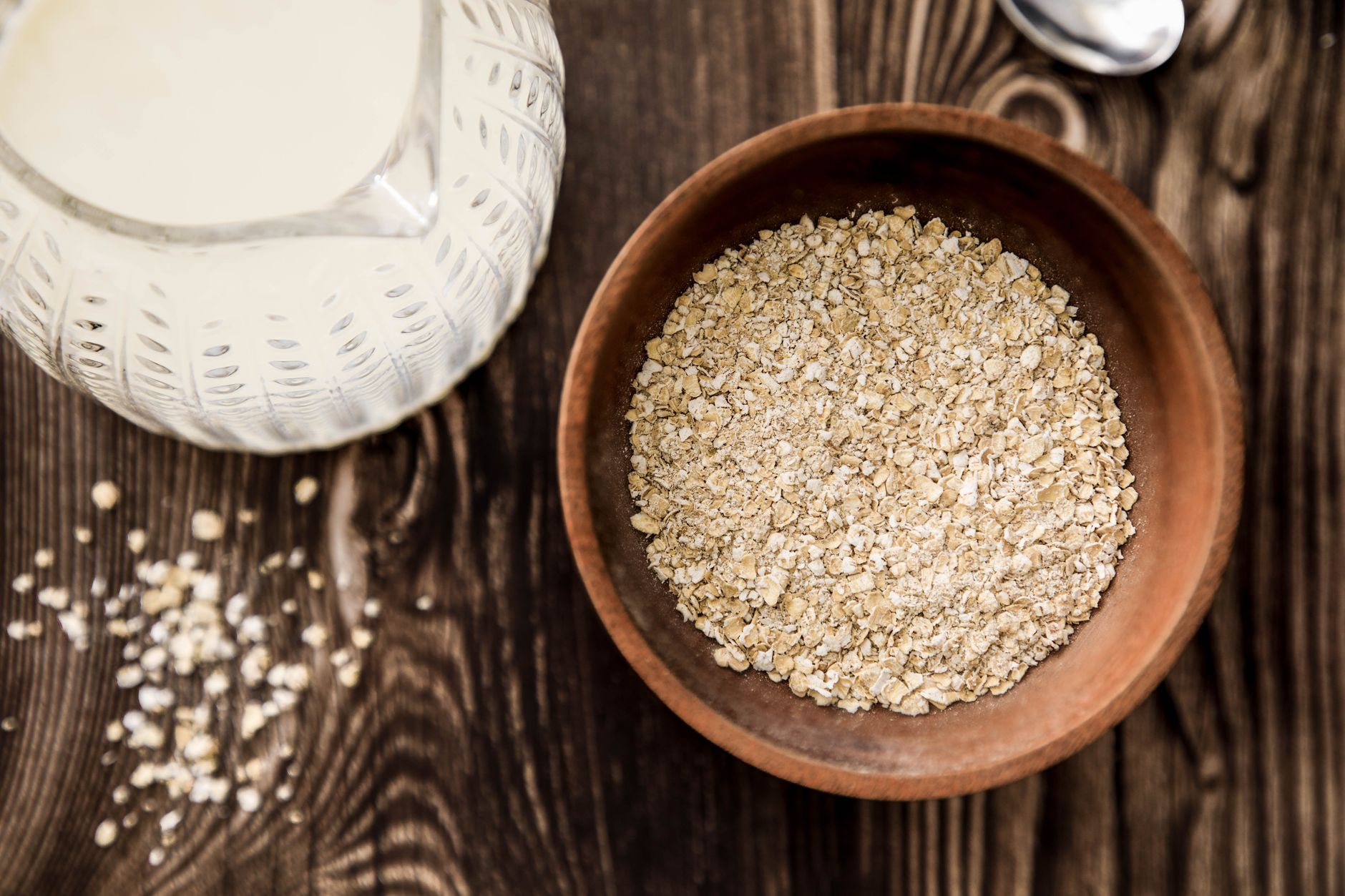
Colloidal oatmeal baths or creams are widely recommended for calming itch and irritation. It's recognized as a skin protectant and works gently, making it a good option even for sensitive or broken skin during a flare.
6. Address the bacterial side of the cycle
Since bacterial imbalance plays a role in flares, gentle cleansing habits matter too. Lukewarm (not hot) baths, mild fragrance-free cleansers, and pat-drying rather than rubbing all help avoid stripping the skin further while keeping bacterial buildup in check. This same idea, that skin surface balance affects flare-ups, shows up in other skin conditions too. If you also deal with an itchy, flaky scalp, our piece on what causes dandruff and flaky scalp covers a related barrier-and-microbe pattern.
7. Identify and reduce personal triggers
Keeping a simple log of flare timing next to things like stress, sweat, new fabrics, or specific foods can help you spot patterns. Triggers are highly individual, so what worsens one person's eczema may not affect another's at all.
Building a Simple Daily Routine
Most people do best with a short, repeatable routine rather than trying many remedies at once. A practical starting point looks like this:
- Bathe in lukewarm water using a mild, fragrance-free cleanser
- Pat skin dry gently, leaving it slightly damp
- Apply a thick moisturizer or a barrier-supportive oil within a few minutes
- Repeat moisturizing at least once more during the day
- Use wet wraps or oatmeal soaks during flare-ups
- Avoid known personal triggers where possible
Consistency matters more than intensity. Skipping moisturizer for a few days often undoes more progress than one flare-up trigger.
Frequently Asked Questions
Is eczema caused by allergies? Eczema is closely linked to allergic conditions like asthma and hay fever because they share an overactive immune response, but eczema itself is primarily a skin barrier issue. Allergies can act as one of several possible triggers rather than the root cause.
Why does eczema get worse at night? Skin loses more moisture overnight, and natural cortisol levels drop, which can make itching feel more intense. Applying a thicker moisturizer before bed and keeping bedroom air from getting too dry can help reduce nighttime flares.
Can food really trigger eczema flares? For some people, certain foods can worsen flares, but this varies a lot between individuals and is not universal. It's more useful to track your own patterns than to assume a specific food is the cause without evidence.
Is coconut oil safe for eczema-prone skin? Virgin coconut oil has shown some benefit in small studies for improving eczema symptoms, likely due to its moisturizing and mild antibacterial effects. As with any new product, it's worth patch-testing first since some people find oils feel too heavy or occlusive.
How long does it take for natural remedies to improve eczema? Consistent moisturizing often shows noticeable improvement within one to two weeks, while barrier repair overall can take longer since skin renews gradually. Flares can return if the routine is stopped, so ongoing care tends to work better than occasional treatment.
Should I stop using soap entirely if I have eczema? You don't need to stop washing, but switching to a mild, fragrance-free cleanser and avoiding hot water can significantly reduce irritation. Harsh soaps strip natural oils that eczema-prone skin can't easily replace on its own.
Sources
- Clinical severity correlates with impaired barrier in filaggrin-related eczema - PubMed
- Interplay of Filaggrin Loss-of-Function Variants, Allergic Sensitization, and Eczema in a Longitudinal Study Covering Infancy to 18 Years of Age
- The allergy gene: how a mutation in a skin protein revealed a link between eczema and asthma - PMC
- Barrier repair therapy in atopic dermatitis: an overview - PubMed
Ready to put this into practice?
More on Natural Remedy For Eczema
Related articles you may find helpful.
Our best sellers
Practical, science-backed resources our readers love.
The Complete Natural Remedy Bundle: All 5 Guides
Gut, skin, eyes, weight and castor oil. Every NaturLab guide in one download, for one small price.
$63.93$9.99
The Complete Gut Health Natural Remedy System
A complete natural remedy system for Gut Health.
$29.00$10.99
Clearer Eyes Naturally: Natural Remedies For Your Eyesight
A complete natural remedy system for Vision.
$29.00$15.97