
6 Natural Remedies for Bloating That Are Backed by Research
Discover evidence-informed natural remedies for bloating, from peppermint oil to gentle movement, and learn why each one helps ease gas and fullness.
Bloating is one of the most common digestive complaints, and it can show up as a tight, swollen feeling in your belly, excess gas, or a sense of fullness that lingers long after a meal. For most people, occasional bloating is not a sign of anything serious. It usually comes down to what you ate, how quickly you ate it, or shifts in the balance of bacteria in your gut.
The good news is that several natural approaches have real support from clinical research, not just tradition. Below are six of the best-studied options, along with a plain-language explanation of why each one may help.

1. Peppermint oil
Peppermint oil contains L-menthol, a compound that relaxes the smooth muscle lining the intestines. This matters because bloating often comes from the gut squeezing too much or too irregularly, which traps gas and causes cramping. By calming these muscle contractions, peppermint oil can ease both the spasms and the trapped gas that go along with them.
Most research uses enteric-coated capsules, which are designed to release the oil in the intestine rather than the stomach. This protects against heartburn, though people who already deal with acid reflux may want to be cautious, since peppermint can also relax the valve between the stomach and esophagus. If reflux is a bigger concern for you than bloating, it's worth reading our guide on natural remedies for acid reflux that are actually backed by research before adding peppermint oil to your routine.
2. A short trial of the low-FODMAP diet
FODMAPs are a group of carbohydrates found in foods like onions, garlic, wheat, certain fruits, and legumes. They are hard for the small intestine to fully absorb, so they travel further down the digestive tract, where gut bacteria ferment them quickly. That fermentation produces gas, and the carbohydrates themselves pull extra water into the intestine. Together, this stretches the gut and creates the classic feeling of bloating.
A temporary reduction in these foods, usually for a few weeks, followed by a careful reintroduction phase, is now a common first step recommended for bloating linked to irritable bowel syndrome. This approach works best as a short, structured experiment rather than a permanent way of eating, since long-term restriction can reduce helpful fiber and gut bacteria. Getting guidance from a dietitian can make the process easier and safer.
3. Specific probiotic strains
Probiotics are living microorganisms that may help rebalance the mix of bacteria in your gut. Some strains appear to reduce the overgrowth of gas-producing bacteria and may also change how sensitive your gut nerves are to stretching, which affects how strongly you feel bloating.
The research here is genuinely mixed. Certain strains, including some Bifidobacterium species and multi-strain blends, have shown modest improvements in bloating in clinical trials, while many others show no real benefit. This is why probiotics are best thought of as a strain-specific tool rather than a guaranteed fix. If you try one, give it about four weeks before deciding whether it's helping.
4. Ginger

Ginger has a well-documented effect on gastric emptying, meaning it helps food move out of the stomach and into the intestine more quickly. Slow gastric emptying is linked to that heavy, full feeling many people notice after eating, so speeding up this process can genuinely ease post-meal bloating. Ginger also has mild anti-inflammatory properties that may support overall digestive comfort.
Fresh ginger tea is an easy way to try this, or you can use a standardized extract capsule, often in the range of one to one and a half grams per day in studies. Ginger is generally very safe, though people on blood thinners should check with a doctor before using higher supplement doses.
5. A short walk after meals
This is one of the simplest and lowest-risk remedies on the list. Movement stimulates the muscles of the digestive tract, helping trapped gas move through and out of the system instead of building up. Gastroenterology guidance consistently points to light activity, such as a ten to fifteen minute walk, as an effective way to relieve gas and reduce bloating.
The key word is gentle. Vigorous exercise right after a large meal can sometimes make discomfort worse in sensitive people, so a relaxed pace is usually more helpful than an intense workout.
6. Fennel seed

Fennel contains a compound called anethole, which is thought to have a mild muscle-relaxing and gas-relieving effect on the gut, similar in concept to peppermint oil but with a smaller body of research behind it. It has a long history of use as a digestive aid, often as a tea after meals or as seeds chewed on their own.
The evidence for fennel in adult bloating is still fairly limited compared to peppermint oil or the low-FODMAP diet, so it's best used as a gentle, low-risk addition rather than a primary strategy on its own.
Putting these remedies together
None of these approaches are a guaranteed cure, and bloating can have many different causes, from food sensitivities to how quickly you eat. What the research supports is a combination approach: identifying your personal trigger foods, supporting healthy gut motility with movement, and trying targeted remedies like peppermint oil or ginger when symptoms flare. If digestive discomfort is a regular pattern for you, it's also worth looking at related issues, since digestive symptoms often overlap, much like the connection between gut health and skin covered in our piece on natural remedies for acne backed by real research.
As always, persistent or severe bloating, especially if it comes with unexplained weight loss, pain, or changes in bowel habits, deserves a conversation with a healthcare provider rather than a self-directed approach alone.
Frequently Asked Questions
How long does it take for peppermint oil to reduce bloating? Some people notice improvement within a few days, but clinical trials typically measure results over two to four weeks of consistent use. Enteric-coated capsules taken before meals tend to work best, since they release the oil where it's needed in the intestine.
Is the low-FODMAP diet meant to be permanent? No, it's designed as a short-term elimination and reintroduction process, usually lasting a few weeks total. The goal is to identify your specific trigger foods, not to restrict a wide range of foods indefinitely.
Can probiotics make bloating worse before it gets better? Some people experience temporary gas or bloating when starting a new probiotic, especially in the first week or two, as gut bacteria adjust. If discomfort continues beyond a few weeks or worsens significantly, it's reasonable to stop and try a different strain.
Does drinking ginger tea work as well as ginger supplements? Fresh ginger tea can offer similar benefits for mild, occasional bloating, though the concentration of active compounds is lower and less consistent than in standardized extract capsules. For more persistent symptoms, a measured supplement may give more reliable results.
Is bloating after every meal something to worry about? Occasional bloating after eating is common and often related to specific foods or eating too quickly. If it happens after nearly every meal, is severe, or comes with other symptoms like pain or changes in bowel habits, it's worth discussing with a healthcare provider to rule out other causes.
Can stress make bloating worse even if my diet hasn't changed? Yes, the gut and nervous system are closely connected, and stress can slow digestion or increase sensitivity to normal amounts of gas, making bloating feel more intense. Managing stress alongside dietary changes can sometimes improve symptoms even when food triggers stay the same.
Sources
- Peppermint oil for the treatment of irritable bowel syndrome: a systematic review and meta-analysis - Database of Abstracts of Reviews of Effects (DARE): Quality-assessed Reviews - NCBI Bookshelf
- Peppermint oil for the treatment of irritable bowel syndrome: a systematic review and meta-analysis - PubMed
- The impact of peppermint oil on the irritable bowel syndrome: a meta-analysis of the pooled clinical data - PubMed
- The impact of peppermint oil on the irritable bowel syndrome: a meta-analysis of the pooled clinical data - PMC
Ready to put this into practice?
More on Natural Remedy For Bloating
Related articles you may find helpful.
Our best sellers
Practical, science-backed resources our readers love.

The Complete Natural Remedy Bundle: All 5 Guides
Gut, skin, eyes, weight and castor oil. Every NaturLab guide in one download, for one small price.
$63.93$9.99
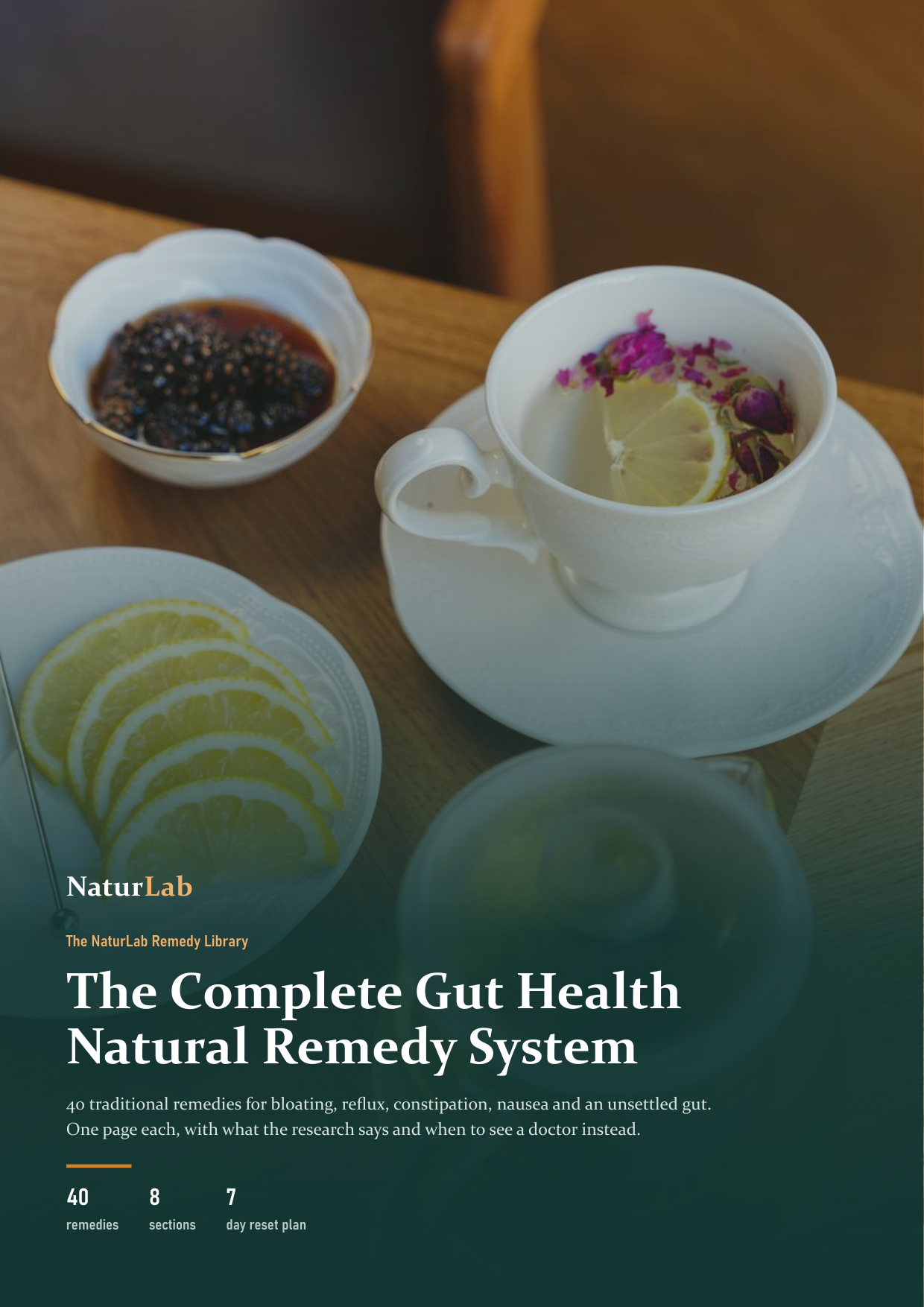
The Complete Gut Health Natural Remedy System
A complete natural remedy system for Gut Health.
$29.00$10.99

Clearer Eyes Naturally: Natural Remedies For Your Eyesight
A complete natural remedy system for Vision.
$29.00$15.97