
What Causes Toenail Fungus and Early Natural Ways to Treat It
Learn what really causes toenail fungus and explore early stage toenail fungus home remedies backed by evidence, from tea tree oil to nail care habits.
Toenail fungus, known medically as onychomycosis, is one of the most common nail problems people deal with, especially as they get older. It is not caused by poor hygiene and it is not a reflection of anything being wrong with your body. It is simply what happens when a very hardy fungus meets an environment that lets it settle in and grow. Understanding the actual causes makes the natural approaches to treating it, especially in the early stages, much easier to understand.

What Actually Causes Toenail Fungus
The fungus itself. Most toenail infections are caused by dermatophytes, the same group of fungi behind athlete's foot. These organisms feed on keratin, the protein that makes up nails and skin. That is also why toenail fungus often shows up after a case of athlete's foot. The fungus simply moves from the skin to the nail.
A warm, damp environment. Fungi need moisture to thrive. Feet sweat throughout the day, and shoes trap that moisture close to the skin. Toenails, being thick and slow growing, create a protected space where fungus can settle in for a long time without being disturbed.
Slow nail growth. A big toenail can take twelve to eighteen months to fully grow out. That slow turnover, combined with reduced blood flow to the feet as we age, gives fungus plenty of time to establish itself before the immune system can fully clear it.
Small injuries to the nail. Tight shoes, running, or simply stubbing a toe can create tiny gaps between the nail and the nail bed. These small openings give fungal spores an easy way in.
Shared damp spaces. Locker rooms, pool decks, and communal showers are classic places to pick up fungal spores, since they survive well on damp surfaces.
Weakened local defenses. Diabetes, a weakened immune system, and general aging are all linked with higher rates of toenail fungus, mainly because they slow the body's ability to fight the infection once it has started.
The good news is that catching this early, while the nail shows just slight discoloration or thickening, gives natural approaches a much better chance of making a real difference.
Natural Approaches That Target Each Cause
1. Tea tree oil for the fungus itself
Tea tree oil has documented antifungal activity against dermatophytes in laboratory studies. Applying a small amount, either undiluted or mixed with a carrier oil, to the nail once or twice daily may help slow fungal growth in early cases. Always patch test first, since it can irritate sensitive skin.
2. Keeping feet dry to remove the environment fungus needs
Since moisture is one of the biggest drivers of fungal growth, changing out of sweaty socks quickly, choosing breathable shoes, and drying carefully between the toes after showering can make a real difference. This does not treat existing fungus but removes the conditions that let it spread.
3. Vinegar soaks to shift the nail's environment
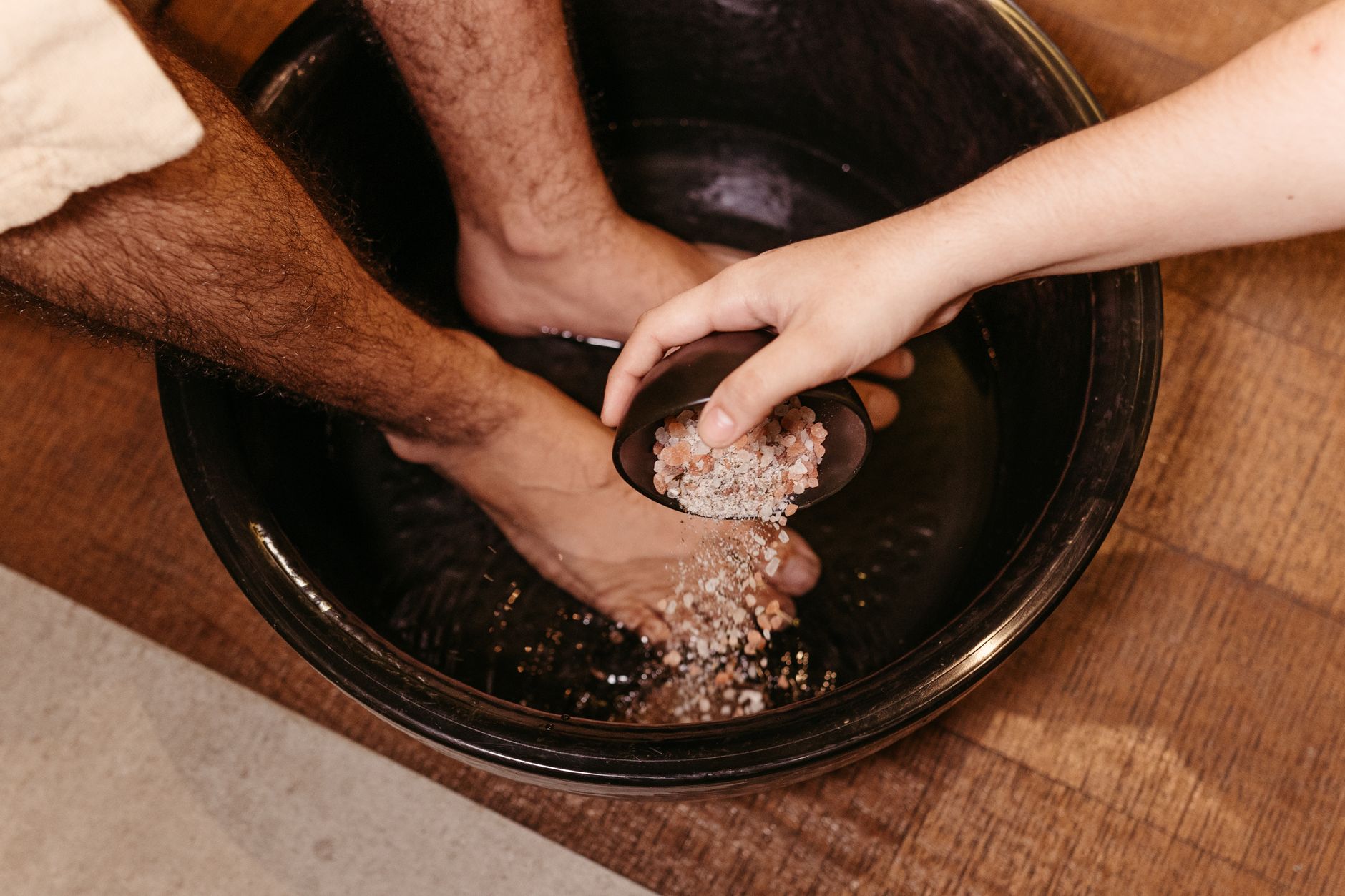
!person trimming toenails The idea behind vinegar soaks is that a more acidic environment is less friendly to fungus. A diluted soak, about one part vinegar to two parts water, for fifteen to twenty minutes a few times a week, is low risk and may help with odor and softening thickened nails, even though strong clinical evidence for a full cure is limited.
4. Trimming and filing to prevent trauma
Keeping nails trimmed straight across and gently filing down thickened areas reduces pressure from shoes and lowers the chance of small injuries that let fungus back in. Always use separate tools for an infected nail to avoid spreading spores to healthy ones.
5. Supporting circulation and immune function
Because slow blood flow and a sluggish immune response make it harder for the body to clear a fungal infection, basic habits like regular movement, a balanced diet, and enough rest all support the body's natural ability to fight fungus over time. Getting consistent, quality sleep is part of this, since poor sleep can weaken immune defenses, something we cover in more depth in our guide on improving sleep at night.
6. Avoiding shared damp surfaces barefoot
Wearing sandals in locker rooms, showers, and around pools reduces the chance of picking up new spores or reinfecting a nail that is already healing.
For a more complete walkthrough of these and other options, including how to combine them into a realistic routine, our post on natural remedies for toenail fungus at home goes into further detail.
If you are looking for a broader resource on nail and skin health in general, The Complete Skin Health Natural Remedy Guide walks through a full natural approach to supporting healthy skin and nails. It is not a cure for any condition, but it can be a helpful reference as you build habits that support your body's own healing process.
Frequently Asked Questions
How long does it take for natural remedies to show results on toenail fungus? Because toenails grow slowly, it usually takes several months to a year to see visible improvement, even with consistent care. Early stage infections tend to respond faster than long standing, thickened ones.
Can toenail fungus go away on its own without treatment? It is uncommon for it to resolve completely without some form of consistent care, since the fungus can stay dormant in the nail bed. Ongoing habits like keeping feet dry make a real difference even if you are also using topical remedies.
Is toenail fungus contagious to other people? Yes, it can spread through shared damp surfaces, towels, or nail tools. Wearing sandals in communal showers and avoiding sharing foot care tools helps lower the risk.
When should I see a doctor instead of relying on home remedies? If the nail is very thick, painful, spreading quickly, or you have diabetes or poor circulation, it is worth seeing a healthcare provider, since these situations may need a more targeted treatment approach.
Does nail polish make toenail fungus worse? Covering an infected nail with polish can trap moisture underneath and may slow healing, so it is generally better to leave the nail uncovered while treating it, especially in early stages.
Sources
- Onychomycosis: Clinical overview and diagnosis - PubMed
- Risk Factors and Treatment Trends for Onychomycosis: A Case–Control Study of Onychomycosis Patients in the All of Us Research Program - PMC
- Onychomycosis - StatPearls - NCBI Bookshelf
- Fungal Nail Infections (Onychomycosis): A Never-Ending Story? - PMC
Ready to put this into practice?
More on Natural Remedy For Toenail Fungus
Related articles you may find helpful.
Our best sellers
Practical, science-backed resources our readers love.

The Complete Natural Remedy Bundle: All 5 Guides
Gut, skin, eyes, weight and castor oil. Every NaturLab guide in one download, for one small price.
$63.93$9.99

The Complete Gut Health Natural Remedy System
A complete natural remedy system for Gut Health.
$29.00$10.99

Clearer Eyes Naturally: Natural Remedies For Your Eyesight
A complete natural remedy system for Vision.
$29.00$15.97