
What Causes Toothache Pain and How to Soothe It Before Your Dentist Visit
Understand what causes toothache pain, then try natural toothache relief before seeing a dentist, plus honest signs it's time to book an appointment.
A toothache rarely comes out of nowhere. It's your body's way of telling you something inside or around the tooth is irritated, inflamed, or infected. Understanding what's actually happening helps you choose the right home approach, and know when it's time to call a dentist instead of waiting it out.

What's Really Causing the Pain
Tooth decay reaching the nerve. Bacteria in the mouth feed on sugars and produce acid that slowly wears through enamel. Once decay reaches the dentin and then the pulp, where the nerve sits, you start to feel sharp pain with hot, cold, or sweet foods.
Inflammation of the tooth's nerve (pulpitis). When bacteria or physical trauma irritate the pulp, it swells inside a hard, unyielding tooth. Mild irritation causes brief sensitivity. More advanced inflammation causes lingering, throbbing pain that can wake you up at night.
Gum infection or abscess. Bacteria can also build up around the gum line or at the root tip, forming a pocket of infection. This often causes deep, pulsing pain, sometimes with swelling or a bad taste, and it needs professional treatment, not just soothing.
Cracks or worn enamel. Small cracks or receding gums can expose the sensitive inner layers of a tooth, causing sharp pain when you bite down or drink something cold.
Sinus pressure. Sometimes an ache in the upper back teeth has nothing to do with the teeth at all. The roots of upper molars sit close to the sinus floor, so sinus congestion can feel like tooth pain.
Teeth grinding or clenching. Ongoing clenching, often linked to stress or sleep, puts steady pressure on teeth and the jaw joint, leading to a dull ache that's often worse in the morning.
Almost every toothache comes down to inflammation, pressure, or infection. Natural remedies work best when they target one of these directly, while the underlying cause, a cavity, crack, or infection, still needs a dentist to actually resolve it.
Natural Approaches, Matched to the Cause

1. Clove oil for nerve pain and sensitivity
Clove contains eugenol, a compound with numbing and antibacterial properties. It's one of the few home remedies also used in professional dental materials. Dilute a small amount in a carrier oil like olive oil and dab it on the area with a cotton swab. Undiluted oil applied directly and left too long can irritate gum tissue, so less is more.
2. Warm salt water rinse for inflammation and bacteria
A simple rinse of half a teaspoon of salt in a cup of warm water helps reduce bacteria and gently clears debris from around the sore tooth. Swish for about 30 seconds and repeat a few times a day. It won't fix a cavity or an abscess, but it can ease general irritation.
3. Cold compress for swelling and throbbing
Holding a cold pack against the outside of the cheek causes blood vessels to narrow, which can reduce swelling and dull throbbing pain. Use it in 15 to 20 minute intervals, with breaks in between, especially useful if the area looks puffy.
4. Peppermint tea bags for temporary numbing
A cooled, damp peppermint tea bag placed against the painful tooth can offer mild numbing relief, thanks to menthol's cooling effect on nerve endings. It's gentle and safe to repeat as needed.
5. Elevating your head at night
If pain worsens when lying flat, extra blood flow to the head may be adding pressure to an already inflamed tooth. Propping yourself up with an extra pillow can ease nighttime discomfort while you wait to be seen.
6. Avoiding triggers while healing
Skipping very hot, cold, sweet, or hard foods reduces the number of times you set off the nerve. This won't heal anything on its own, but it limits flare-ups while you arrange care.
For a more detailed walkthrough of these remedies, our guide on natural remedies for toothache at home before you see a dentist covers step-by-step methods and safety notes in more depth.
When Home Remedies Aren't Enough

Home approaches are meant to manage discomfort temporarily, not resolve the underlying problem. See a dentist promptly if you notice:
- Pain that lasts more than a day or two
- Swelling in the face or gums
- Fever or a general feeling of being unwell
- A bad taste or discharge near the tooth
- Pain that wakes you up repeatedly at night
These can point to an infection that needs antibiotics or a procedure like a root canal, and delaying care can allow infection to spread beyond the tooth.
It's worth remembering that tooth pain is just one of many ways the body signals irritation or infection. If you're dealing with other lingering discomfort, our piece on what causes a sore throat and natural remedies that actually soothe it walks through a similar cause-first approach for a different part of the body.
Frequently Asked Questions
Can a toothache go away on its own? Sometimes mild sensitivity from a small crack or temporary irritation settles down, but pain from decay or infection usually won't resolve without treatment. If pain returns or worsens, it's a sign the underlying cause is still there.
Is it safe to use clove oil every day? Occasional use diluted in a carrier oil is generally considered safe for short-term relief, but daily long-term use isn't recommended since it can irritate gum tissue over time. It should be a bridge to dental care, not a permanent fix.
Why does my tooth hurt more at night? Lying flat increases blood flow to the head, which can add pressure to an already inflamed tooth. Propping your head up with pillows can reduce this effect while you wait for treatment.
Can sinus problems really cause tooth pain? Yes. The roots of the upper back teeth sit close to the sinus floor, so sinus pressure or congestion can be felt as an ache in those teeth even when the teeth themselves are healthy.
What's the difference between a toothache and an abscess? A toothache can come from sensitivity or mild inflammation, while an abscess is a pocket of infection that often causes deeper, throbbing pain, swelling, and sometimes fever. An abscess needs prompt dental treatment rather than home care alone.
Should I take pain medication while trying natural remedies? Over-the-counter pain relief can be used alongside natural approaches like salt water rinses or cold compresses, as long as you follow dosing instructions. If you're unsure what's safe for your situation, a pharmacist or dentist can advise you directly.
Sources
- An Update on Herbal Remedies for Treatment of Alveolar Osteitis: A Narrative Review - PMC
- Analgesic Efficacy of Phytotherapeutic Agents in Dental Pain Management: A Systematic Review - PMC
- Comparative Evaluation of Pain Perception Following Topical Application of Clove Oil, EMLA 5%, and Lignocaine Hydrochloride Gel 2% as a Pre-anesthetic Agent in Children Aged 7-10 Years: A Randomized Controlled Study - PubMed
- Analgesic Efficacy of Phytotherapeutic Agents in Dental Pain Management: A Systematic Review
Ready to put this into practice?
More on Natural Remedy For Toothache
Related articles you may find helpful.
Our best sellers
Practical, science-backed resources our readers love.
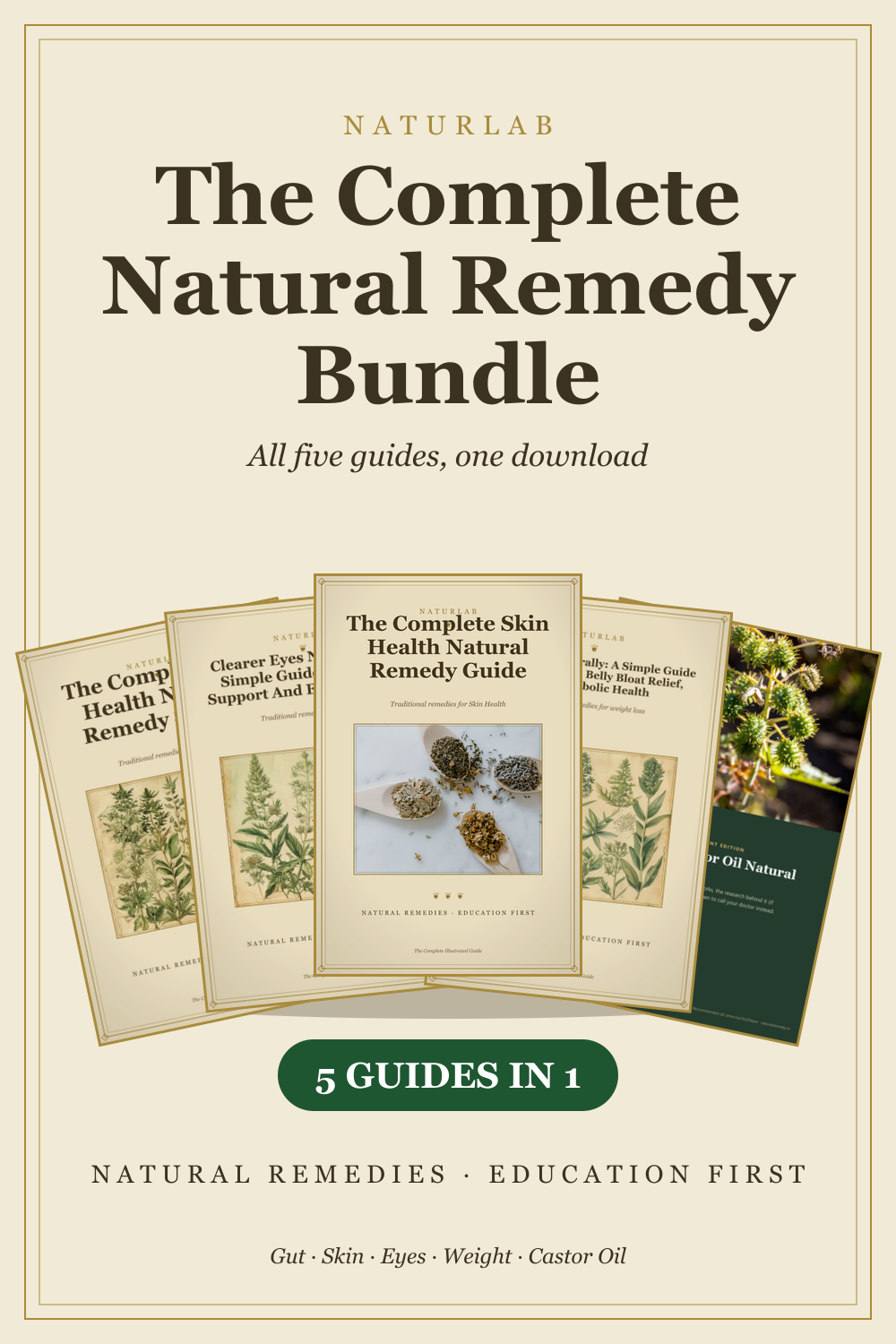
The Complete Natural Remedy Bundle: All 5 Guides
Gut, skin, eyes, weight and castor oil. Every NaturLab guide in one download, for one small price.
$63.93$9.99

The Complete Gut Health Natural Remedy System
A complete natural remedy system for Gut Health.
$29.00$10.99

Clearer Eyes Naturally: Natural Remedies For Your Eyesight
A complete natural remedy system for Vision.
$29.00$15.97