
What Causes Sinus Infections and Natural Ways to Ease Them at Home
Learn what actually causes sinus infections and try natural, evidence-informed ways to ease congestion, pressure, and drainage at home.
Most people call any stuffy, achy, pressure-filled nose a "sinus infection," but understanding what's actually happening inside your sinuses makes it much easier to pick remedies that help rather than just guessing. Once you know the real cause, the natural approaches that work start to make a lot more sense.

What's actually happening in a sinus infection
Your sinuses are small air-filled spaces behind your face lined with tissue that produces mucus. Tiny hair-like structures called cilia sweep that mucus out through narrow openings into your nose. When those openings swell shut, mucus backs up, sits still, and can turn into a breeding ground for whatever started the problem in the first place.
Here are the main things that set this off, roughly in order of how common they are.
A viral cold. The large majority of sinus infections start as an ordinary viral upper respiratory infection. The virus inflames the lining of your nose, the drainage openings swell shut, and pressure builds up. Most of these clear on their own within seven to ten days without ever turning bacterial.
A secondary bacterial infection. In a smaller share of cases, trapped mucus becomes a good place for bacteria to grow after the virus has already caused swelling. This is more likely if symptoms drag on past ten days, seem to get better and then suddenly worse again, or come with a high fever and thick, colored discharge.
Allergies. Allergic rhinitis causes the same swelling and blockage pattern through a different immune pathway, and repeated allergy flare-ups are one of the biggest drivers of long-lasting sinus problems.
Structural issues. A deviated septum, nasal polyps, or naturally narrow sinus passages don't cause an infection by themselves, but they create bottlenecks that make any swelling turn into a full blockage much faster.
Dryness and irritants. Smoke, pollution, chlorine, and dry indoor air from heating or air conditioning slow down your cilia and dry out the mucus lining, making it easier for problems to take hold.
The common thread across nearly all of these causes is the same: swelling, poor drainage, and mucus that has nowhere to go. Most natural remedies work by addressing one of those three things.
Natural approaches that match each cause

1. Saline nasal rinsing, for poor drainage
Rinsing your nasal passages with a saline solution physically flushes out thickened mucus and some of the irritants sitting in your sinuses, while also thinning the mucus so it drains more easily on its own. Research reviews on saline rinsing for sinus symptoms have generally found it improves comfort and reduces reliance on medication compared to doing nothing. Use distilled, sterile, or boiled and cooled water, never tap water straight from the faucet, and clean your rinsing device between uses.
2. Steam and warm moisture, for thick, stuck mucus
Warm, moist air can loosen mucus and offer short-term relief, similar to what a hot shower does. The research on steam specifically is mixed and doesn't show a dramatic effect, but it's low-risk and many people find it genuinely comforting when paired with other habits. Just be careful with hot water to avoid burns. For a fuller walk-through of steam, humidifiers, and other congestion-easing habits, see our guide on natural remedies for sinus congestion and pressure.
3. Staying hydrated, to keep mucus thin
Drinking enough water throughout the day keeps mucus thinner and easier to move, which supports drainage without any extra effort. This is basic physiology rather than a special remedy, but it's one of the easiest habits to overlook when you're not feeling well.
4. Warm compresses, for pressure and discomfort
A warm, damp cloth held against the face over the sinuses can ease the ache and pressure that comes with swelling, by relaxing tissue and improving local blood flow. It won't clear an infection, but it can make the waiting period more bearable.
5. Managing allergies, to reduce repeated swelling
If allergies are a regular trigger for you, reducing exposure to dust, pollen, or pet dander, and keeping indoor humidity in a moderate range, can cut down on how often your sinuses swell shut in the first place. This addresses the root cause rather than just the symptom.
6. Humidifying dry indoor air, to protect cilia function
Running a humidifier, especially in winter or in air-conditioned rooms, helps keep the mucus lining moist so your cilia can keep doing their job of clearing debris. Clean the humidifier regularly, since a dirty one can introduce its own irritants.
Some people also notice that postnasal drip from a sinus infection unsettles their stomach, especially after meals. If that sounds familiar, our piece on what causes nausea after eating covers gentle ways to settle that side effect too.
When to see a doctor

Most sinus infections are viral and resolve on their own with time and comfort measures. See a healthcare provider if symptoms last more than ten days without improving, get noticeably worse after initially getting better, come with a high fever, cause severe facial pain or swelling around the eyes, or if you have repeated sinus infections that keep coming back, since that can point to allergies, structural issues, or a chronic infection that needs a different approach.
Frequently Asked Questions
Is a sinus infection contagious? The virus that often starts a sinus infection, like a common cold virus, can be contagious. Once it has progressed into sinus swelling and pressure, though, the sinus infection itself generally isn't something you pass to others the way the original cold was.
How long does a sinus infection usually last? Most viral sinus infections improve within seven to ten days. If symptoms are still severe or getting worse after ten days, it's worth checking with a doctor, since that timeline is one of the signs a bacterial infection may have developed.
Can natural remedies replace antibiotics for a sinus infection? Natural remedies are best suited for easing symptoms and supporting drainage, not for treating a confirmed bacterial infection that needs antibiotics. If a doctor diagnoses a bacterial sinus infection, natural approaches can still be used alongside their advice for comfort.
Why do my sinus infections keep coming back? Recurring sinus infections are often linked to ongoing allergies, a structural issue like a deviated septum, or lingering inflammation that never fully settles between episodes. A doctor or an ear, nose, and throat specialist can help pinpoint which of these is driving the pattern.
Does a neti pot actually work for sinus infections? Saline rinsing with a neti pot or squeeze bottle has some of the better research support among home remedies for sinus symptoms, mainly because it physically flushes out mucus and irritants. Using sterile or distilled water and keeping the device clean are important for doing it safely.
Can dry winter air really cause sinus problems? Dry air doesn't cause an infection on its own, but it dries out the mucus lining in your nose and slows down the tiny cilia that normally clear debris, which makes it easier for swelling and blockage to take hold. A humidifier can help offset this, especially during colder months.
Sources
Ready to put this into practice?
More on Natural Remedy For Sinus Infection
Related articles you may find helpful.
Our best sellers
Practical, science-backed resources our readers love.
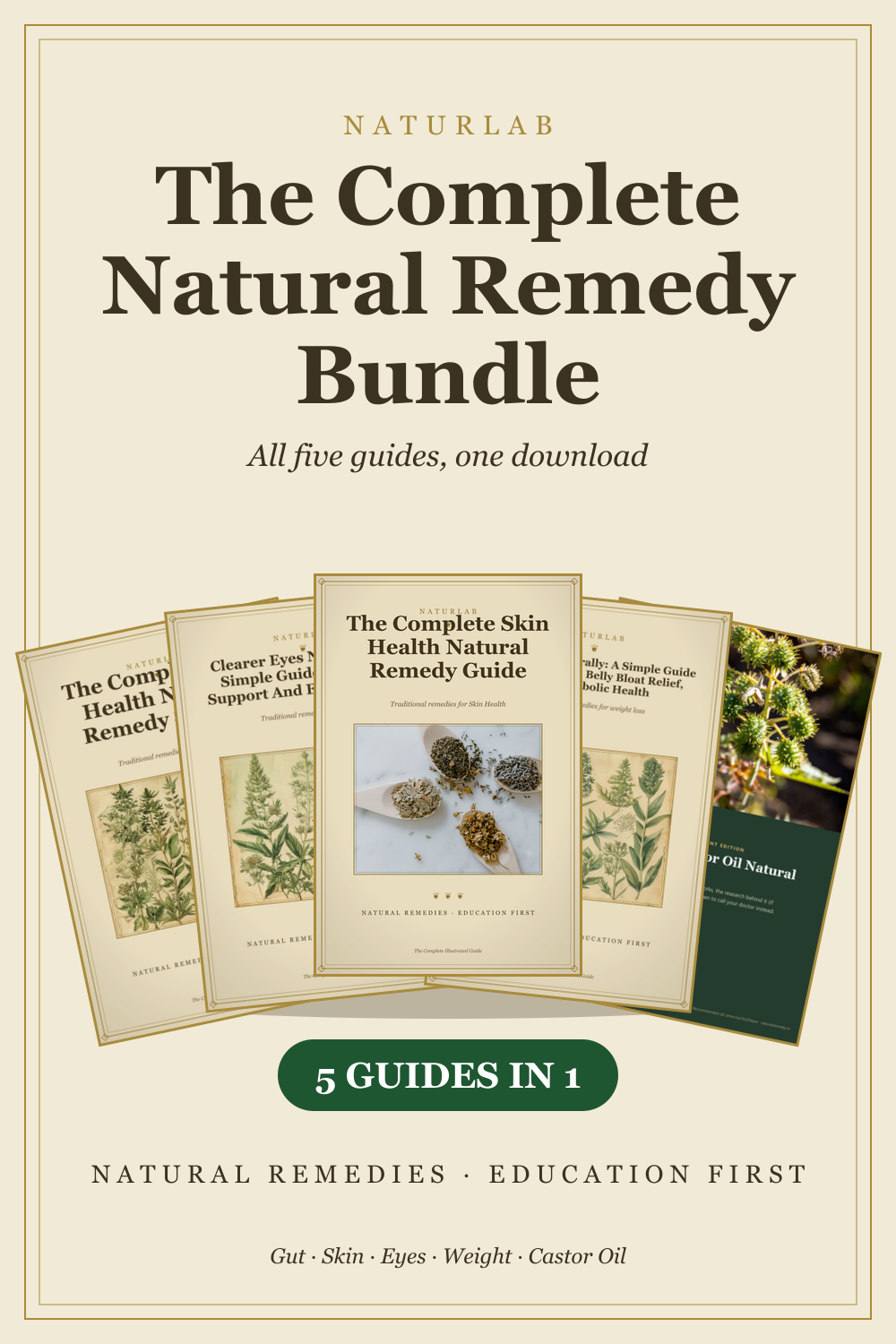
The Complete Natural Remedy Bundle: All 5 Guides
Gut, skin, eyes, weight and castor oil. Every NaturLab guide in one download, for one small price.
$63.93$9.99
The Complete Gut Health Natural Remedy System
A complete natural remedy system for Gut Health.
$29.00$10.99
Clearer Eyes Naturally: Natural Remedies For Your Eyesight
A complete natural remedy system for Vision.
$29.00$15.97