
What Causes Heartburn After Eating and Natural Ways to Ease It
Learn what actually causes heartburn after eating and explore natural remedies for heartburn that target each cause, from food triggers to gentle daily habits.
If you've ever felt that warm, burning creep up your chest right after a meal, you already know heartburn. Most articles about it either scare you or hand you a random list of foods to avoid. It helps more to understand what's actually happening in your body first, because that's what lets you pick remedies that make sense instead of guessing.

What Heartburn Actually Is
Heartburn happens when stomach acid moves backward into the esophagus, the tube connecting your mouth to your stomach. The esophagus isn't built to handle acid the way your stomach is, so it reacts with that familiar burning feeling.
The gatekeeper here is a ring of muscle called the lower esophageal sphincter, or LES. It's supposed to stay closed except when food or liquid is passing through. After-meal heartburn usually comes down to one or more of these causes.
- The LES relaxes at the wrong moment. This is the biggest driver for most people. Certain foods, carbonated drinks, alcohol, and simply having a very full stomach can trigger this.
- Too much pressure on the stomach. Eating a large meal, lying down soon after eating, or wearing tight clothing can push stomach contents upward against the LES.
- Slower stomach emptying. Food and acid sit longer, which raises the chance of backflow.
- Irritant foods. Some foods, like chocolate, mint, alcohol, and caffeine, relax the LES directly. Others, like spicy or acidic foods, don't cause reflux but sting once acid is already present.
Occasional heartburn after a big or rich meal is normal and not dangerous. If it happens two or more times a week, it's worth mentioning to a doctor, since that pattern is usually called gastroesophageal reflux disease, or GERD. But the everyday, "that lunch was too much" kind is what most natural approaches are aimed at, and that's the focus here.
Fix the Meal Itself

Since a very full stomach and certain foods both relax the LES directly, this is often the most useful place to start.
Practical steps
- Eat smaller, more frequent meals instead of one or two large ones. A less distended stomach means less pressure pushing against the LES.
- Slow down. Eating quickly tends to mean swallowing more air and eating past the point of comfortable fullness.
- Notice your personal triggers. Common culprits include fatty or fried foods, chocolate, alcohol, caffeine, mint, and carbonated drinks, but triggers vary a lot from person to person. A simple food diary for two weeks is more useful than following a generic avoidance list.
- Go easy on very acidic or spicy foods if you already have symptoms, since they won't cause reflux on their own but can make the burning feel worse once it happens.
Fix the Pressure on Your Stomach
Because abdominal pressure pushing against the LES is a direct mechanical cause, simple posture and timing changes can help quite a bit.
Practical steps
- Stay upright for two to three hours after eating. Gravity does real work keeping stomach contents where they belong.
- Avoid bending over or lying flat soon after a meal.
- If evening reflux is a bigger issue for you than daytime symptoms, our guide on natural remedies for heartburn at night covers sleep positioning and other nighttime-specific steps in more depth.
- If you carry extra weight around the midsection, gradual, modest loss has been linked to real symptom improvement, since it reduces pressure on the stomach.
Fix It With Gentle, Food-Based Remedies

A few simple additions may help ease symptoms once they've started, without needing to overhaul your whole diet.
Options worth trying
- Ginger tea, sipped slowly after a meal, is traditionally used to support digestion and settle the stomach. Start with a mild cup and see how your body responds.
- Chewing gum for about 20 to 30 minutes after eating increases saliva production, which can help clear acid from the esophagus faster.
- A small glass of water can help rinse acid back down, though it's not a fix for frequent symptoms.
- Alginate-based products, made from brown seaweed, form a floating gel layer on top of stomach contents that physically blocks acid from splashing upward. This is more of a symptom-control tool for after meals than a long-term solution, but it's one of the better-studied natural options available.
Fix the Everyday Habits Around It
Stress and tension don't cause heartburn directly, but they can make the digestive system more sensitive and change how quickly the stomach empties. If you also deal with tension headaches or a tight jaw when you're stressed, it's worth noting the overlap, our piece on natural remedies for headaches touches on some of the same calming habits, like slower breathing and regular meal timing, that can support digestion too.
Other simple habits that support comfortable digestion include avoiding tight waistbands after eating, not smoking near mealtimes, and keeping a consistent eating schedule so your stomach isn't left empty for long stretches followed by a large meal.
Frequently Asked Questions
Is heartburn after eating always a sign of something serious? No. Occasional heartburn after a large, fatty, or spicy meal is common and usually not a sign of a serious problem. It becomes worth discussing with a doctor if it happens two or more times a week or interferes with sleep or eating.
How soon after eating should heartburn go away on its own? For most people, mild heartburn eases within one to two hours as the stomach empties and acid levels settle. If it lingers much longer or keeps returning, it's a sign your trigger foods or meal size may need adjusting.
Can drinking water help stop heartburn once it starts? A small sip of water can sometimes help rinse acid back toward the stomach, but it won't address the underlying cause. Relying on it as a frequent fix isn't a substitute for adjusting meal habits or trigger foods.
Are there foods that help prevent heartburn rather than trigger it? Ginger, oatmeal, and non-citrus fruits like melon or banana are generally gentler on the digestive system for people prone to reflux. Since triggers are individual, it helps to track what works for your own body rather than following a strict universal list.
Does eating slower actually make a difference? Yes. Eating quickly often means swallowing more air and eating past the point of comfortable fullness, both of which increase pressure on the stomach and make reflux more likely. Slowing down and chewing thoroughly can noticeably reduce symptoms for some people.
Sources
Ready to put this into practice?
More on Natural Remedy For Heartburn
Related articles you may find helpful.
Our best sellers
Practical, science-backed resources our readers love.
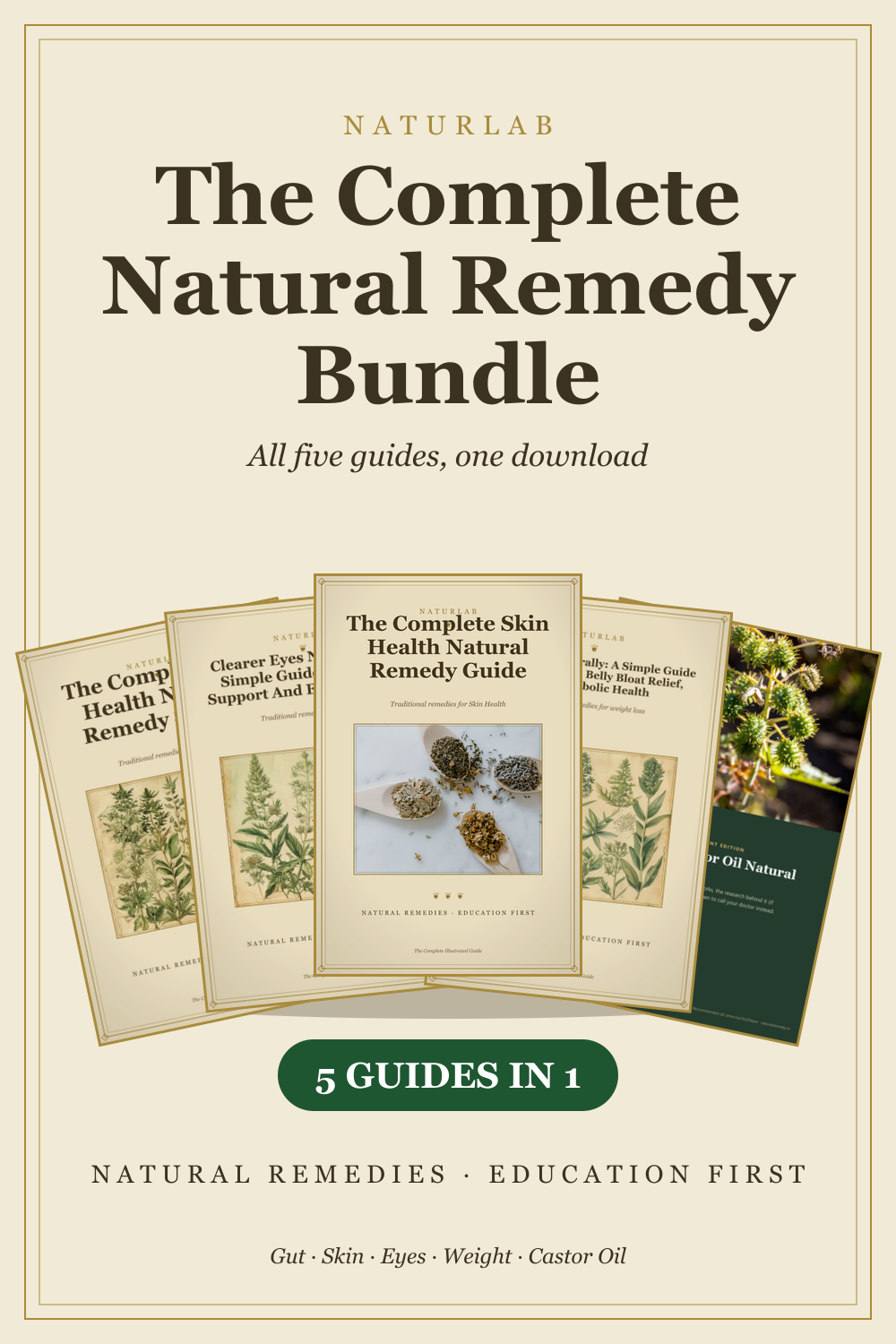
The Complete Natural Remedy Bundle: All 5 Guides
Gut, skin, eyes, weight and castor oil. Every NaturLab guide in one download, for one small price.
$63.93$9.99
The Complete Gut Health Natural Remedy System
A complete natural remedy system for Gut Health.
$29.00$10.99

Clearer Eyes Naturally: Natural Remedies For Your Eyesight
A complete natural remedy system for Vision.
$29.00$15.97